Her family called it a ‘cancer curse.’ They discovered it was a gene mutation passed down generations.
A genetic mutation traced through generations of family cancer diagnoses
(InvestigateTV) — A gene that can be passed down from parent to child often increases the risk of certain cancers, sometimes without any warning signs.
Kristin Crowley, a reporter for InvestigateTV, has known for nearly a decade that she carries a BRCA gene mutation. The gene mutation affects roughly one in 400 people in the United States.
The mutation significantly increases a woman’s risk for breast and ovarian cancer compared with the rest of the population. In men, it raises the risk for breast, prostate and other cancers.
“The story I’m about to share isn’t about me,” Crowley said. “It’s meant to give everyone a glimpse into this mutation, the impact it has, and the steps people can take who have it.”
When Crowley learned she carried the mutation, she was told to consider surgery to avoid getting cancer.
“I’ve been getting mammograms since I was 30 years old,” she said. “Ten years later, this is my last one.”
Crowley made the decision to get a prophylactic bilateral mastectomy, a procedure in which all breast tissue is removed before cancer develops.
“It’s a major operation, and for some an extreme decision,” she said. “But for me, it’s a necessary one that you’ll understand once you meet my family.”
A family’s “cancer curse”
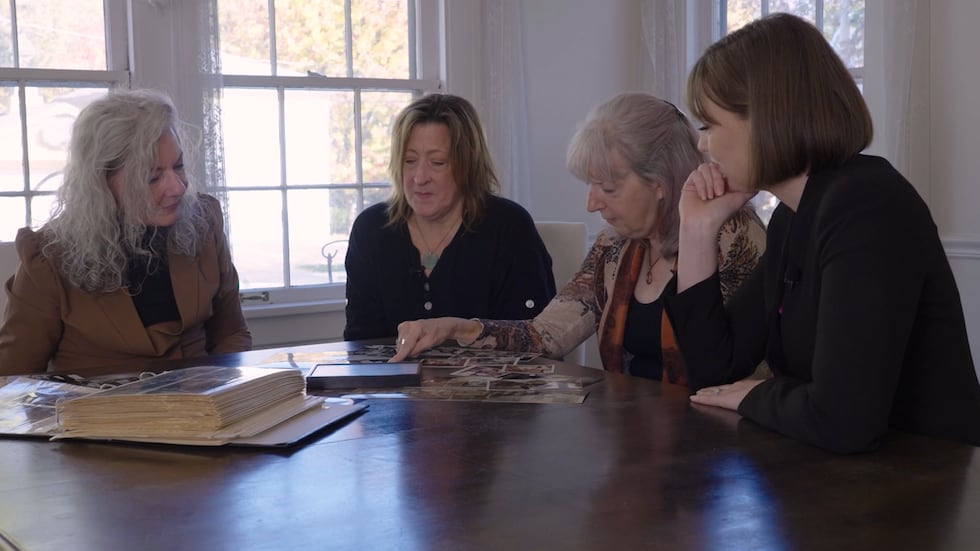
Three sisters — Christine, Janet and Casey — can find the humor in just about everything when they’re together, even cancer.
The trio, along with Crowley, sit around a table looking at old pictures of family members.
“It’s almost like our family won the lottery, just not the good lottery,” Crowley joked.
“Yeah, we never win the good lottery,” her Aunt Janet responded.
Cancer has run through Crowley’s family for generations. Pancreatic, breast and ovarian claimed the lives of her great-great grandfather, great aunts and uncles. All of them were in their 60s or younger.
Her grandfather, John Lucas, died of biliary duct cancer at 65 in 1992. To the sisters, he was their hero.
The family called it a “cancer curse” because for decades there was no explanation.
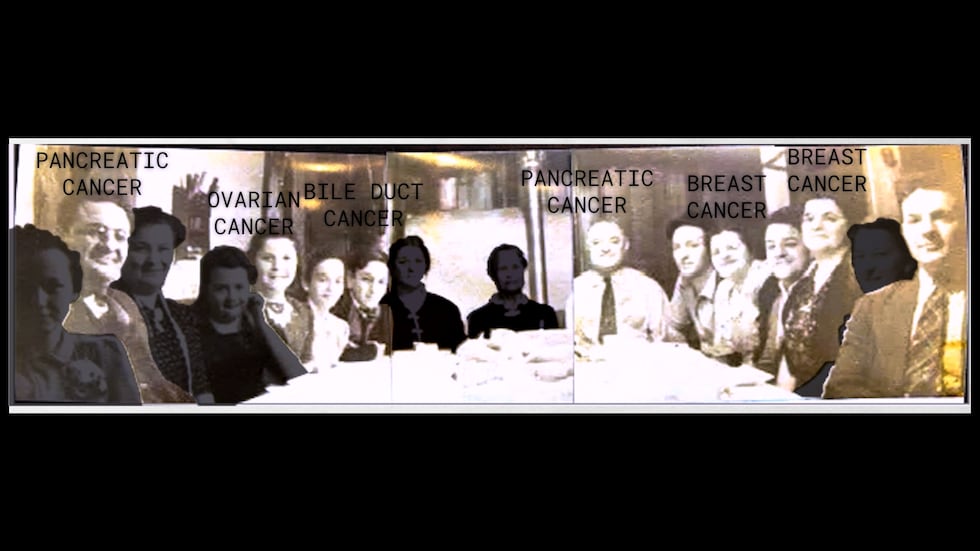
Genetic testing would bring them answers 20 years after her grandfather’s death, but it took more diagnoses in the family to get there.
Janet was diagnosed with breast cancer first. Her Aunt Casey said she had a lump since 2009 that had been treated as a cyst that would later be diagnosed as breast cancer after Janet’s diagnosis.
Both aunts were treated with lumpectomies. Less than two years later, both were diagnosed with breast cancer again. Doctors then tested them for a BRCA mutation, and both tested positive for BRCA2.
Crowley’s mother, Christine, was tested next and tested positive as well.
It wasn’t a family curse, it was the genetic mutation that was passed down for generations.
People who carry the genetic mutation have a 50% chance of passing it on to their children. Crowley’s grandparents had five children, and four of them carry the mutation.
Crowley’s Uncle Mike received a BRCA-positive diagnosis after doctors found pancreatic cancer. He died in 2022, just shy of 67. He was the first cancer death in the family since Crowley’s grandfather.
“By the time he found out he had cancer it was too late to stop it,” Crowley said. “And that’s a reality I decided I never wanted to face.”
All three sisters had mastectomies. The aunts had the surgery in response to cancer diagnoses; Crowley’s mother had it to prevent cancer.
“I can’t say that I miss them,” Christine said to the group. “Because it was so stressful having them that I just couldn’t wait for them to get out.”
“I can finally see my feet when I look down,” Casey said, which led to laughter from the sisters.
Deciding on preventive surgery
Dr. Jamie Wagner, a breast surgical oncologist at the University of Kansas Health System, was Crowley’s surgeon.
Wagner described the procedure as removing the breast tissue while saving the skin and nipple areola complex, comparing it to “taking the pillow out of the pillowcase.”
Women have three reconstruction choices after the procedure. They can forgo reconstruction and remain flat, use tissue from other parts of the body to reconstruct the breast, or receive implants. Crowley chose implants.
Wagner said the procedure differs from a breast augmentation because an augmentation leaves the breast tissue in place, while a mastectomy removes it.
Removing the tissue also removes nerves, and many women lose feeling in their breasts permanently. Reconstruction can require two or more additional surgeries after the mastectomy.
Crowley said her lifetime risk of developing breast cancer due to the BRCA mutation was 70%. A mastectomy reduces that risk by 95%.
“Being part of a family seemingly plagued by bad odds, surgery for me sounds like a good bet,” Crowley said.
Surgery and recovery
The procedure lasted a little more than three hours. Surgeons removed all of Crowley’s breast tissue and began the first phase of reconstruction during the same operation by placing implants directly.
After surgery, Crowley experienced pain in her side and back rather than her chest. She was admitted to the hospital after her blood pressure dropped and the pain continued.
She was diagnosed with post-mastectomy pain syndrome, a condition that affects 20% to 60% of mastectomy patients. Crowley’s pain was positional, occurring when she reclined but not when she sat up.
“Mastectomy patients can experience that because we are dividing all of those nerves,” Wagner explained. “And for some patients, that nerve gets inflamed and it’s just not settling down.”
A course of steroid back injections about a month after surgery resolved Crowley’s pain.
Pathology reveals cancer
Three months after surgery, Crowley met again with Wagner to review pathology results from the removed tissue.
Wagner told her the tissue contained a 3-millimeter area of low- to intermediate-grade ductal carcinoma in situ.
“I had cancer,” Crowley said.
“It was cancer,” Wagner confirmed.
Ductal carcinoma in situ is a slow-growing, non-invasive type of cancer. Crowley’s last mammogram before surgery had come back clean. Wagner said the cancer was likely present at the time of that scan.
“Not only did I have breast cancer and not know it, I had the exact same cancer that my aunts had,” Crowley said.
The mastectomy was her only necessary treatment. She did not need chemotherapy or radiation and is considered cancer-free. A declaration many of her relatives never got to hear.
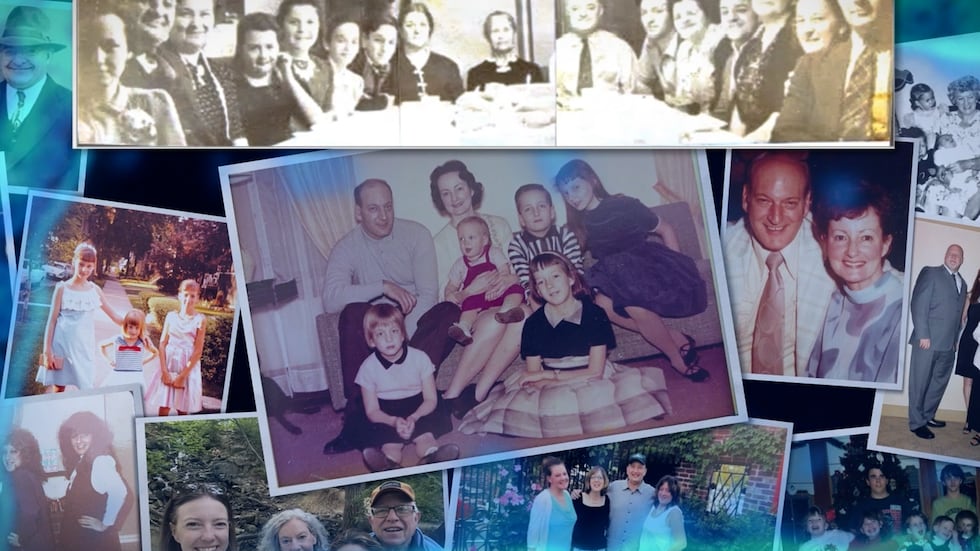
“Cancer has been a part of my family’s story for so long, but we have far more stories to tell,” Crowley said. “And far more to laugh about.”
Genetic testing has advanced
More than 30 years have passed since the discovery of the BRCA1 and BRCA2 mutations, and genetic testing has changed since then.
Results that used to take two months are now ready in as little as two weeks. Most insurance companies cover the test for people with a relative who has the mutation or a strong family history of cancer.
Breast cancer is not the only concern associated with the BRCA mutation. It is also linked to ovarian, uterine, pancreatic and melanoma cancers, and doctors often recommend a broader screening plan for carriers.
Wagner said not everyone who tests positive for a BRCA mutation needs a prophylactic or risk-reducing mastectomy.
“Knowledge is power,” Wagner said. “And that’s what the genetic testing and the expansion of genetic testing has provided us, both from the provider and from the patient’s standpoint.”
Wagner said high-risk screening, which combines a mammogram and an MRI every year, is an alternative to risk-reducing mastectomy.
“The survival for patients is actually no different when we do high-risk screening compared to doing a risk-reducing mastectomy,” Wagner said. “The reason that high-risk screening works is because it does identify it so incredibly early. And we know that with early identification, we have 98% survival.”
Wagner said the challenge is that patients who catch cancer early through screening may still need chemotherapy or radiation, depending on the cancer. A mastectomy allows patients to avoid that risk, which is why some choose that option, especially those with a strong family history of cancer.
According to the Cleveland Clinic, the BRCA test is either a blood draw or saliva collection. The sample is sent to a lab, and results generally take a few days to a week.
People navigating BRCA-related issues can call the Susan G. Komen Breast Care Helpline at 1-877-465-6636.
People who undergo mastectomy surgery should note that costs can vary, but insurance that covers a mastectomy must also cover reconstruction under federal law.
Copyright 2026 Gray Media Group, Inc. All Rights Reserved.